


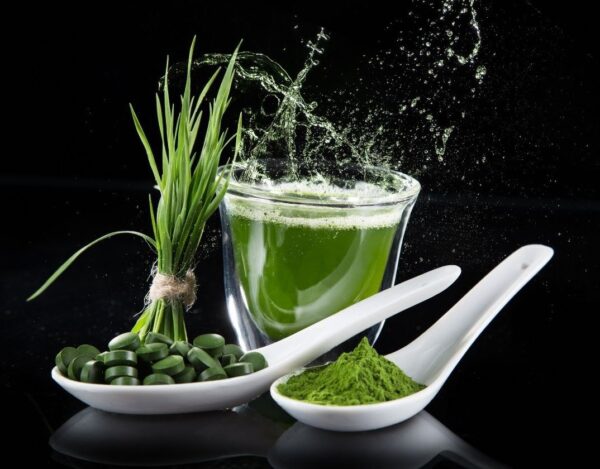
Chlorella is a microscopic, single-celled green alga that lives in fresh water and is cultivated, dried, and sold as a powder or pressed tablet. It is often marketed as a superfood. The key distinction is that chlorella is a true plant-like organism with a nucleus and a tough cell wall. Spirulina, its usual comparison, is a cyanobacterium with no nucleus at all. The two look alike in a jar of green powder, but they are biologically and practically different foods. This article treats Chlorella - Superfood as a label to examine, not a promise to repeat.
Is Chlorella an Ancient Traditional Food or a Modern One?
Much of what we carry at Rapé Shop has deep roots in the practices of named peoples. Chlorella does not. It has no ceremonial lineage and no indigenous origin story, and it is more respectful to say so plainly than to borrow one.
The genus was described in 1890 by the Dutch microbiologist Martinus Beijerinck, who isolated Chlorella vulgaris from a pond near Delft. For decades it was a laboratory organism, studied for photosynthesis because it grows fast and divides cleanly. After the Second World War, researchers in the United States, Germany, and Japan looked at microalgae as a possible protein source for a growing world population. Commercial food production took hold in Japan in the 1960s, and Taiwan later became one of the largest growers. Today Japan, Taiwan, China, and parts of Europe all produce chlorella at scale.
So when you see chlorella described as a "Japanese alga," that refers to where the modern food industry grew up, not to an old Japanese tradition.
Where an algae tradition does exist
There is one well-documented historical precedent for eating microalgae, and it involves spirulina, not chlorella. Spanish chroniclers in the sixteenth century described the Mexica (Aztec) people harvesting a blue-green material from Lake Texcoco, drying it into cakes they called tecuitlatl. The chemist W. V. Farrar reviewed these accounts in a 1966 paper in Nature. Communities around Lake Chad in Africa have also long harvested and dried a similar cyanobacterium, known locally as dihé. These are genuine food traditions, and they belong to spirulina's story.
What Species Are Sold as Chlorella?
Most products on the market name one of two species on the label:
- Chlorella vulgaris: the original type species, widely grown in Europe and Asia.
- Chlorella pyrenoidosa: a common trade name, especially on Japanese and Taiwanese products. Modern genetic work has reassigned many strains sold under this name to other species, including Chlorella sorokiniana and Auxenochlorella pyrenoidosa.
For a shopper, the practical point is that the species name on the label is useful but not the whole picture. Strain, growing method, and processing matter as much as the Latin binomial.
How Is Chlorella Grown and Processed?
Chlorella cells are a few thousandths of a millimeter across. A single cell can split into several new cells in less than a day under good light and temperature. Producers grow them in one of three ways:
- Open ponds: shallow raceway pools in sunlight. Cheaper, but more exposed to dust, other microbes, and anything carried in the water or air.
- Closed photobioreactors: transparent tubes or panels that control light, temperature, and contamination. Usually more expensive.
- Fermentation tanks: dark steel vessels where the algae feed on sugar instead of light. This method yields a paler, sometimes yellowish biomass with less chlorophyll.
The cell wall question
Chlorella has a thick, rigid cell wall. Labels often say "broken cell wall" or "cracked cell wall," which means the dried cells were milled, pressure-treated, or otherwise disrupted during processing. The idea is to make the contents of the cell easier for the body to reach. This is a real manufacturing step and a fair thing to look for on a label, though the methods and their effectiveness vary between producers.
What Is Actually Inside Chlorella?
Reviews of Chlorella vulgaris composition report that the dried biomass is often around half protein by weight, with the exact figure depending on strain and growing conditions. It also contains:
- Chlorophyll: the green pigment, usually present at high levels in light-grown chlorella.
- Carotenoids: including lutein and beta-carotene.
- Minerals: notably iron, with variable amounts of others.
- Vitamins: several B vitamins and vitamin K. Some strains contain the active form of vitamin B12, while others contain mainly inactive analogues. A 2020 review in Nutrients by Bito and colleagues notes that B12 content differs widely between products.
- Dietary fiber and polysaccharides: largely from the cell wall.
About "Chlorella Growth Factor"
Many brands highlight a fraction they call CGF, or Chlorella Growth Factor. It is a hot-water extract of the cells that contains nucleotides, peptides, and other compounds. The term comes from industry rather than from a standardized scientific definition, and strong claims about it are not well supported by human research. It is fine to treat CGF as a product feature, but not as proof of any particular effect.
Chlorella vs Spirulina: What Is the Real Difference?
Both are sold as green superfoods, and both are dense in protein. The differences are mostly biological and practical:
- Organism type: chlorella is a eukaryotic green alga. Spirulina (Arthrospira platensis and A. maxima) is a cyanobacterium.
- Cell wall: chlorella's wall is tough and often needs processing. Spirulina's is soft and breaks down easily.
- Pigments: chlorella is typically higher in chlorophyll. Spirulina contains phycocyanin, which gives it a bluer tint.
- History: spirulina has the documented Mexica and Lake Chad food traditions. Chlorella is a twentieth-century food.
- Taste: chlorella tends toward grassy and marine. Spirulina often tastes more like seaweed and pond.
Neither is simply "better." They are different foods that happen to share a color.
What Can Chlorella Honestly Be Said to Do?
Chlorella is a food, not a medicine. Small human studies have looked at its role in nutrition, blood lipids, and other markers, and a 2001 review by Merchant and Andre summarized early clinical trials of Chlorella pyrenoidosa. Results are mixed and the studies are generally small. A fair summary is that chlorella may support a varied diet as a source of protein, pigments, and certain micronutrients. Claims that it purifies the body, pulls out toxins, or reverses disease go beyond what the evidence shows, and we do not make them.
Reasons for caution
- Contamination: algae absorb what is in their water. Look for products with third-party testing for heavy metals and microbial purity. An organic label covers growing inputs but is not, on its own, a heavy metal guarantee.
- Vitamin K: people taking blood-thinning medication such as warfarin are generally advised to discuss vitamin K sources with a clinician.
- Iodine and immune conditions: anyone with thyroid or autoimmune concerns may want professional advice first.
- Individual reactions: digestive upset, allergic responses, and sensitivity to light have been reported in some people.
How Do You Read a Chlorella Label?
A useful label tells you more than "superfood." Look for the species name, the country of cultivation, the growing method if stated, whether the cell wall has been processed, and evidence of independent lab testing. In the European Union, chlorella appears in the European Commission's Novel Food Catalogue as a food with a history of consumption before 1997, which means it is regulated as an ordinary food rather than a new one. Store the powder or tablets in a sealed container, away from heat, light, and humidity, since moisture and air degrade pigments over time.
If you are exploring grounding foods alongside the ceremonial plants in our shop, Rapé Shop staff are glad to talk through origins and labels with you. We would rather you understand what is in the jar than buy on a slogan.
In shop practice, anchor the habit in concrete products: Rapé Kuntanawa Jatoba, Kuntanawa Sananga Forte, Ormus Mindfulness. Compare labels in the same language and product form.
Sources
- Safi C, Zebib B, Merah O, Pontalier PY, Vaca-Garcia C. Morphology, composition, production, processing and applications of Chlorella vulgaris: a review. Renewable and Sustainable Energy Reviews, 2014.
- Bito T, Okumura E, Fujishima M, Watanabe F. Potential of Chlorella as a dietary supplement to promote human health. Nutrients, 2020.
- Merchant RE, Andre CA. A review of recent clinical trials of the nutritional supplement Chlorella pyrenoidosa. Alternative Therapies in Health and Medicine, 2001.
- Farrar WV. Tecuitlatl: a glimpse of Aztec food technology. Nature, 1966.
- European Commission. EU Novel Food Catalogue, entry for Chlorella (status as food consumed before 15 May 1997).