


 Currency
Free shipping
Menu
- 100% NATURAL COSMETICS by RAPEE.SHOP
- SETS
- Rapé® and Accessories
- SANANGA®
- Ambil and ChilcAmbil®
- CEREMONIAL COCOA
- Matcha, tea and herbs
- Mushrooms, supplements, and extracts
- INCENSE
- ORMUS
- COPPER VESSELS
- Tensor Jewelry
- Stones and jewelry
- CEREMONIAL INSTRUMENTS
- Home and body
- KANNA
- PEPTIDES
- CLOTHES
- Molecular Hydrogen Inhaler
- New products
- Products on sale


€7.58
Regular price:
€10.11

€7.58
Regular price:
€10.11

€7.41
Regular price:
€9.88

€7.58
Regular price:
€10.11

€6.89
Regular price:
€9.19

€10.62
Regular price:
€15.17

€7.41
Regular price:
€9.88

€10.78
Regular price:
€15.40

€12.23
Regular price:
€17.47

€12.23
Regular price:
€17.47

€9.65
Regular price:
€13.79

€7.58
Regular price:
€10.11
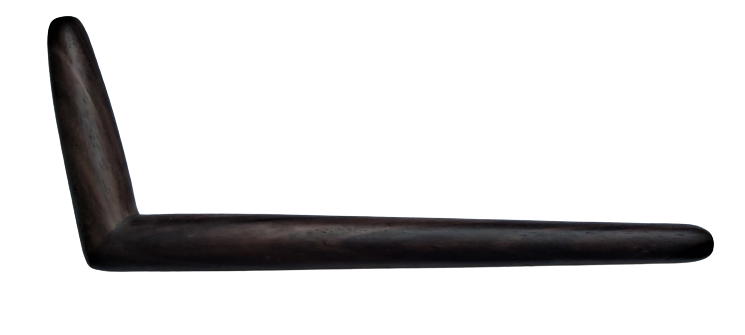
Tepi Made of Indian Rosewood (Dalbergia latifolia)
 0
 "Pin It")
Description
Tepi Made of Indian Rosewood
Dalbergia latifolia
This is a handmade tepi, a straight pipe made of Indian rosewood, the timber traded in Asia as Sono or Sonokeling. Its length is 17-19 cm, and each piece is shaped individually, so grain and tone vary slightly from one tepi to the next.

Product details
Material: Indian rosewood (Dalbergia latifolia)
Length: 17-19 cm
Finish: handmade, natural wood grain
What a tepi is
In Amazonian tradition, the tepi is the longer, straight counterpart of the self-applicator known as kuripe. It belongs to settings where rapé is shared between two people, and it is valued as an object of ceremony and craftsmanship. On Rapee.shop it is offered as an ethnographic item; rapé itself is presented in its cultural context and not as a product for consumption.
Why Indian rosewood
Indian rosewood is hard, heavy and dense, which makes it a good choice for a long, slim object that needs a clean, straight channel through its whole length. The wood resists insects well and, when properly dried, holds up against fungal decay. Its colour ranges from golden brown to deep purplish brown, often crossed by darker, almost black streaks, and it tends to darken further with age.
Fresh rosewood has a gentle, sweet scent that can linger for a while after carving. If a piece has an unusual aroma, it does not reflect the quality of the wood itself.
The tree behind the timber
Dalbergia latifolia is native to the Indian subcontinent and is also widely grown in Java, where the name Sonokeling comes from. In English it appears as East Indian rosewood, Bombay blackwood or Java rosewood; in India it is known as beete and satisal. The tree can reach around 40 metres, with a dense, dome-shaped crown, and is slow-growing. It is evergreen in moist forests and may shed leaves in drier areas, which helps it cope with drought.
The genus Dalbergia honours the Swedish brothers Nils and Carl Gustaf Dalberg. The species name latifolia simply means broad-leaved. Only a limited number of species in this large genus yield true rosewood.
A protected, sought-after wood
Rosewoods are among the most heavily traded wild products in the world. In 2016 the parties to CITES (the Convention on International Trade in Endangered Species of Wild Fauna and Flora) placed the whole Dalbergia genus under trade controls, and Dalbergia latifolia is listed as Vulnerable. This scarcity, together with its density and elegant grain, explains why the wood is prized for fine furniture, guitar bodies and fretboards, veneers, carving and luxury flooring.