


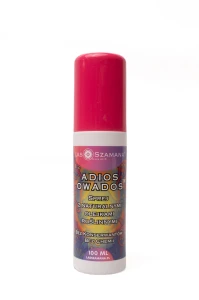


Forest incense ritual boundaries are the agreements you make before lighting: when the burn begins, when it ends, which room it fills, and who has agreed to breathe it. The key distinction is between ritual smoke and ambient scent. Ambient scent runs in the background while life goes on. Ritual smoke has edges. It starts on purpose, holds your attention for a short, defined time, and then stops, with the room returned to ordinary air. Without those edges, a blend made to mark a threshold slowly turns into wallpaper.
Why incense needs edges at all
Fragrance traditions that take incense seriously have almost always framed it. In the Japanese art of kōdō, people speak of "listening" to incense. A tiny piece of aromatic wood is warmed, passed around, and attended to for a few breaths, then the session closes. In many South and East Asian temple settings, incense is offered at set moments rather than left burning all day. The common thread is not quantity. It is attention held inside a container.
There is also a practical reason. Your nose adapts quickly. After a few minutes in a steady scent, the brain turns the signal down so you can notice changes instead. Burn longer and you smell less, which tempts you to burn more. A boundary breaks that loop. Short sessions keep the layers of a blend readable from one evening to the next.
Know what you are burning
Our Forest Incense with Agarwood, Osmanthus and Rose combines three materials, each with its own history. Respecting them starts with keeping those histories distinct.
- Agarwood is the dark, resin-saturated heartwood that forms in Aquilaria and related trees, usually in response to injury or infection. It has been prized in Southeast Asia, the Middle East, India, China, and Japan for centuries. It is also under real pressure. All Aquilaria and Gyrinops species are listed in CITES Appendix II, which means international trade is regulated to prevent overharvesting of wild trees. Cultivated, inoculated plantations now supply much of the legitimate trade. Its scent reads as deep, woody, and slightly sweet.
- Osmanthus (Osmanthus fragrans) is a flowering shrub long cultivated in China, where its blossoms scent teas, sweets, and autumn festivals. It adds a soft, apricot-like floral lift.
- Rose carries a warm floral middle that bridges the wood and the brighter blossom.
One honest point: Rapé Shop is rooted in Amazonian plant tradition education, and agarwood does not come from that lineage. We do not fold every aromatic into a generic "shamanic" story. To respect Indigenous plant lineages, you name where a material actually comes from, credit the cultures that developed its use, and ask about ethical botanical sourcing instead of assuming it. A forest blend can sit on the same shelf as Amazonian tools without pretending they share one origin.
The start: a threshold you can name
A good start has three parts: a fixed moment, a prepared surface, and one plain sentence.
The fixed moment. Attach the session to something that already happens: the end of the work day, the hour after dinner, the first quiet moment on a weekend morning. If you choose a new time each night, you will spend your willpower negotiating instead of practicing.
The prepared surface. Set out a heat-safe holder on a stable, nonflammable surface, away from curtains, paper, and shelves overhead. Keep a small dish of water or sand nearby. Unlock the window before you light, not after. Some practitioners keep their holder, lighter, and incense together in a dedicated spot or pouch, so that setting up becomes part of the ritual rather than a scramble. If you are building that kit, this companion piece from our ceremonial range is worth a look.
The plain sentence. Say or write one line of intention. Nothing elaborate: "Work is done." "This hour is for reading." "I am arriving home." The sentence tells you what the smoke is marking. Without it, you are simply perfuming a room.
The stop: closing matters as much as lighting
Most home incense habits fail at the end, not the beginning. People light, drift into other tasks, and the stick burns down unnoticed. A ritual boundary needs a defined close.
- Set a duration. Five to fifteen minutes of attended burning is plenty for a home session. If your incense form burns longer, you can extinguish it early by pressing the lit end firmly into sand or ash. Never leave it smoldering unattended.
- Air the room. Open the window wide for a few minutes. Airing out is part of the ritual, not a chore afterward. It returns the space to everyone who uses it.
- Speak a closing line. Mirror your opening: "That is complete." The words give your attention permission to move on.
- Put everything away. Store unused incense sealed, cool, and dry, out of direct sun. Humidity and heat dull aromatic material faster than most people expect.
A quick test of whether the boundary held: within ten minutes of closing, the room should feel usable for ordinary life again.
Shared air: the ethics nobody mentions
Smoke does not stay where you put it. It moves under doors and through vents, into a partner's clothes and a neighbor's hallway. A boundary practice treats air as something you share.
Ask before you start a new habit. Tell the people you live with what you plan to burn, when, and for how long. Give them a real chance to say no, and accept a no without argument. You can move to another hour, another room, or outdoors where it is safe and permitted.
Be more careful around sensitive people. Babies, older adults, pets (birds especially), and anyone with asthma or scent sensitivity deserve cleaner air and shorter exposure. Burning any plant material produces fine particles, and reviews of incense smoke in indoor air have linked heavy, poorly ventilated use to airway irritation. This is not a reason for fear. It is a reason to keep sessions short and ventilation honest.
Pause for guests. If someone arrives mid-session, close it, air the room, and welcome them into clean air. Strong scent can trigger headaches or memories a visitor did not choose. Stopping early is part of practicing well, not a failure of it.
Respect shared buildings. Hotel rooms, hostels, offices, and rentals with smoke rules are not private ceremonial spaces. In those settings, keep the intention and the breathing, and skip the flame.
Dose: the smallest amount that still feels deliberate
Start smaller than you think you need. Light one stick, or burn only part of one, and sit near the edge of the plume rather than in the thick of it. With agarwood blends, the woody base often shows itself first, and the osmanthus and rose open as the session settles. Notice that sequence. That is what you are paying attention for.
If you notice very little, resist the urge to double the amount tomorrow. Check three things first: Is the room still holding yesterday's scent? Has the incense been stored somewhere warm or damp? Was your attention elsewhere? Subtle botanical materials reward a clean room and a quiet mind more than they reward volume.
A simple two-week log helps: date, minutes burned, window open or closed, one word for how you felt before and one word after. Patterns show up quickly, and they are yours, not a marketing promise.
Keeping expectations grounded
Aromatic woods and flowers have traditionally been used to mark transitions, honor guests, and gather attention for prayer or reflection. Inside a clear boundary, a short incense session may support a sense of pause between one part of your day and the next. It does not replace sleep, medical care, or the plain work of asking the people around you for quiet. We would rather you burn a little, with care, than a lot without thought.
If you want to pair your incense ritual with other quiet tools, this item from our ritual shelf sits naturally alongside it. Whatever you choose, start with a single evening slot, one room, and a closing sentence. Repeat it for two weeks before adding anything else. Clear edges first, then depth.
Sources
- CITES Appendices I, II and III, listing of Aquilaria spp. and Gyrinops spp. in Appendix II (agarwood-producing taxa).
- Lin, T.C., Krishnaswamy, G., and Chi, D.S. (2008). "Incense smoke: clinical, structural and molecular effects on airway disease." Clinical and Molecular Allergy, 6:3.
- U.S. Environmental Protection Agency: Introduction to Indoor Air Quality, guidance on ventilation and indoor combustion sources.
- World Health Organization (2010). WHO Guidelines for Indoor Air Quality: Selected Pollutants. WHO Regional Office for Europe.
- National Fire Protection Association (NFPA). Candle and open-flame home safety guidance, applicable to incense burning (never leave a flame or ember unattended; keep away from combustibles).